
Negative equity is often a sign of financial distress and can indicate the company’s inability to meet its financial obligations. As assets increase, the value of the company increases, which increases the value of shareholders’ ownership stake in the company. This can lead to higher profitability and potentially higher dividends for shareholders. Equity https://sixtogonzalez.com/cash-and-cash-equivalents-what-is-it-formula/ refers to the residual interest in the assets of a company after deducting its liabilities. It represents the ownership claim on the company’s assets and can be considered as the value that the owners or shareholders have invested in the business. Equity plays a crucial role in determining the financial stability and value of a company.
Estás ingresando al sitio de U.S. Bank en español
Unlocking your home equity could allow you to upgrade, make improvements to your home or even invest in a new property. Divide Total Provided Value (TPV) by Share Value (SV), calculating total equity shares and percent. If you are not paying cash out of pocket initially, decide the wage multiplier (WM) value you are going to provide to the individual’s base hourly wage.

Why Use the Return on Equity Metric?
However, calculate equity these factors do not influence our editors’ opinions or ratings, which are based on independent research and analysis. See how much available equity you may be able to access as a deposit for a new property purchase. You have the flexibility to decide when and how much to use (up to your available credit limit) through Online Banking, by phone, at our financial centers or with no-access-fee checks. Homeownership has many benefits — one of the biggest being the opportunity to build wealth over time. You can use NAB Internet Banking or the NAB app to see if redraw is available with your loan and how much you have available to use.
How to find a better mortgage deal
Under the 5th calculation involving a 1031 exchange, no taxes are recognized in the current tax year, leaving the full purchasing power of the entire gross equity to acquire more real property held for investment. A common rule of thumb is to maintain at least 20% equity in your home after taking out a loan or line of credit. To calculate your LTV ratio, divide your current loan balance by the appraised value of your home and multiply the answer by 100. A home equity loan is one-time installment loan secured by your home. Both the interest rate and monthly payments are fixed, ensuring you’ll have a predictable repayment schedule for the life of the loan.
- Imagine that you have Company A, with total assets of $3 million.
- High-interest debt is any debt with an interest rate significantly higher than the average for that type of debt.
- A tax deduction is an amount deducted from your taxable income, which can lower the amount of taxes you owe.
- The equity is the portion of your home’s value that you own outright, minus any outstanding mortgage debt.
- Sometimes the new HELOC payment can double or even triple what the borrower was paying for the last decade.
- The higher the internal rate of return (IRR), the more profitable a potential investment will likely be if undertaken, all else being equal.
- The first step in determining your home equity is to find out your home’s current value.
Step 5: Calculate your loan-to-value ratio (LTV)

Fortunately, changes in your local housing market aren’t the only way to move the needle on your home’s value. You can make strategic renovations to make your home worth more. Now that you know how to calculate how much home equity you have, you can explore borrowing against it.
Rate caps

Book in a chat with one of our friendly experts, or start applying online and we’ll be in touch. For context, with our team at ShoppingGives, each employee was made an offer of future employment. This was included in their contract and provided salaries for future hire –stating what would be offered when the company could afford to bring them on full time.
Gold and Silver Data Pages
In the commercial real estate (CRE) industry, the target IRR on a property investment tends to be set around 15% to 20%. The Internal Rate of Return (IRR) is the annualized interest rate at which the initial capital investment must have grown https://www.bookstime.com/ to reach the ending value from the beginning value. In reality, there are many other quantitative and qualitative factors that are considered in an investment decision.) If the IRR is lower than the hurdle rate, then it would be rejected. Some industries tend to achieve higher ROEs than others, and therefore, ROE is most useful when comparing companies within the same industry.
Interest rate fluctuations
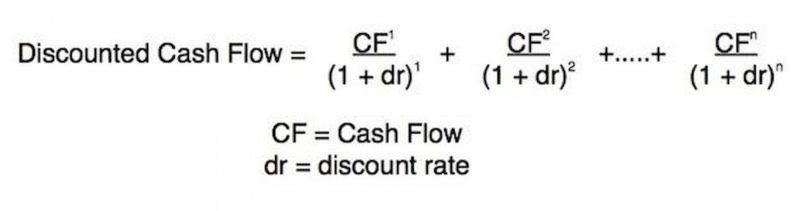
The investment with the highest internal rate of return is usually preferred. The Internal Rate of Return (IRR) is the discount rate that makes the net present value (NPV) of a project zero. In other words, it is the expected compound annual rate of return that will be earned on a project or investment. When you enter the repayment period, you’ll need to pay back the principal and interest.
The real power of a 1031 exchange is not just the tax savings — it is the tremendous increase in purchasing power generated by this tax savings. With the advantages of leverage, every dollar saved in taxes allows a taxpayer to generally purchase multiple times more real estate when taking advantage of debt financing. Many taxpayers are surprised to discover that capital gain taxes are far higher than 15% or 20% federal tax rates. State taxes, which can be as high as 13.3% in some states, are added to the federal capital gain tax owed.